
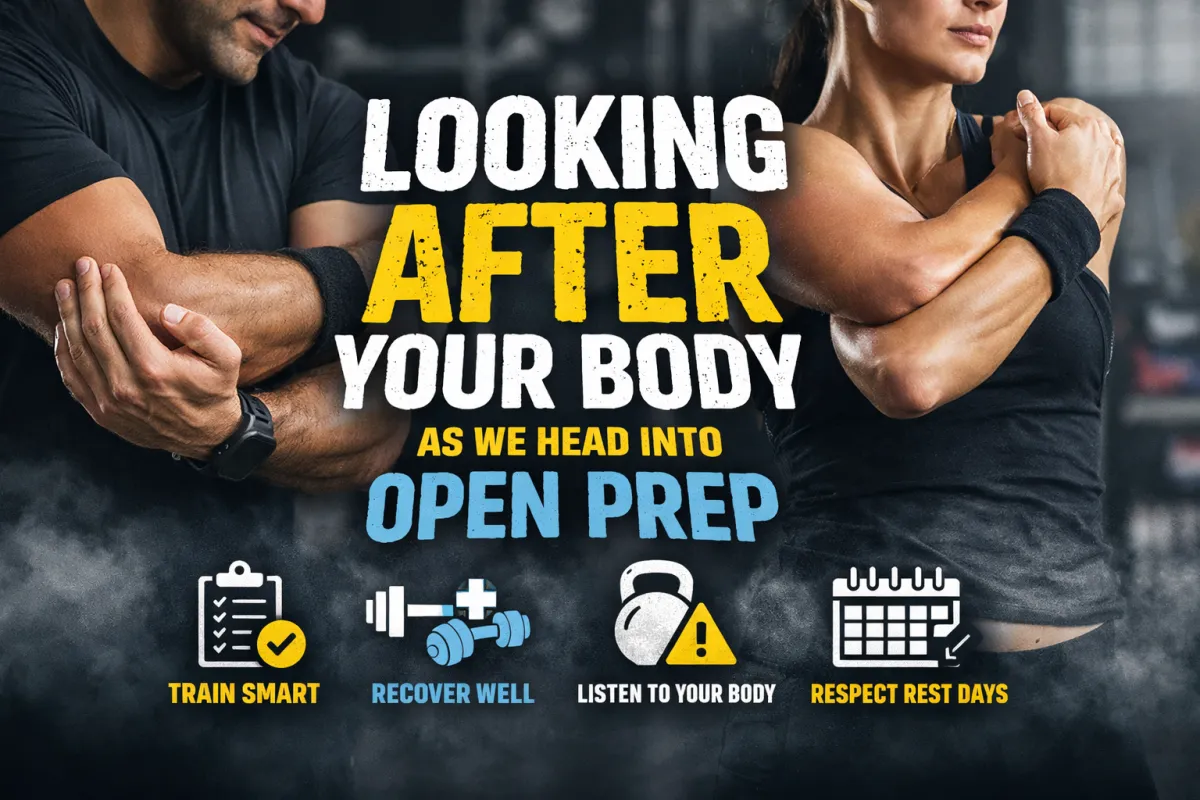
Looking After Your Body as We Head Into Open Prep
Lately we’ve noticed an increase in similar injuries around the gym. Particularly elbow and bicep issues. These don’t usually come from one big moment or a single mistake. They’re more often the result of a few things stacking up: a shift in programming, an end-of-year motivation spike, more training time over the holidays, or trying to squeeze extra progress out of the lead-up to the Open.
Unlike acute injuries (think rolled ankles or pulled muscles), overuse injuries are slow and sneaky. They start as tightness, mild aches, or a “niggle” that feels better once you’re warm, but never quite goes away. Because they don’t feel dramatic, they’re easy to ignore. Stretch it, roll it, train through it and before you know it, it’s something you have to deal with.
With the Open approaching, it’s also natural to want to make a last-minute push. That mindset isn’t wrong. Effort and intent matter, but when it turns into doing more without enough thought, we start to see fatigue and injuries creep in.
Injuries don’t usually happen because someone is weak.
They happen because someone is getting stronger faster than their body can adapt.
Muscles and fitness adapt quickly. Tendons, ligaments, joints and connective tissue adapt much more slowly. If we don’t respect that gap, things start to break down.
What You Can Do Right Now
Our goal isn’t to train less. It’s to train smarter. Here are some simple, actionable ways to reduce risk while still training hard:
1. Be honest with soreness
Muscle soreness that fades in 24 - 48 hours is normal
Joint or tendon soreness that lingers, sharpens, or keeps returning is a signal
If it’s been hanging around for more than a few sessions, tell a coach
2. Adjust volume before intensity
Keep the intent high, but reduce unnecessary extra reps or sets
You don’t need to max out every pull-up, toes-to-bar or barbell cycle to get better
Quality reps > grinding reps
3. Scale early, not late
Scaling isn’t a failure. It’s a training decision
If elbows, shoulders or biceps are feeling cooked, adjust before pain forces you to stop completely
Ask your coach for alternatives that still hit the stimulus
4. Respect rest days
Rest days aren’t “lost training”. They’re where adaptation happens
If you’re training 5 - 6 days a week, at least one full rest or active recovery day matters
More isn’t always better if recovery isn’t keeping up
5. Warm up and accessory work actually count
The prep and accessory pieces aren’t optional extras
They’re there to build tissue tolerance and durability
Rushing these is often where overuse issues begin
6. Communicate early
Coaches can only help if we know what’s going on
Mention niggles early. Small adjustments now beat forced time off later
We want you training hard, enjoying the process, and still doing this for years to come. Not just surviving the Open and limping out the other side.
Train well. Recover well. Live well.
Let’s head into Open prep strong and smart.

Gym Cartel is dedicated to helping all people to appreciate that being active and healthy is one of the greatest gifts of life.

CROSSFIT DESIRE CENTRAL



Copyright ©2024 Gym Cartel Albion. All rights reserved